
SpaceX may lose up to 40 Starlink satellites due to a space storm
09 February 2022
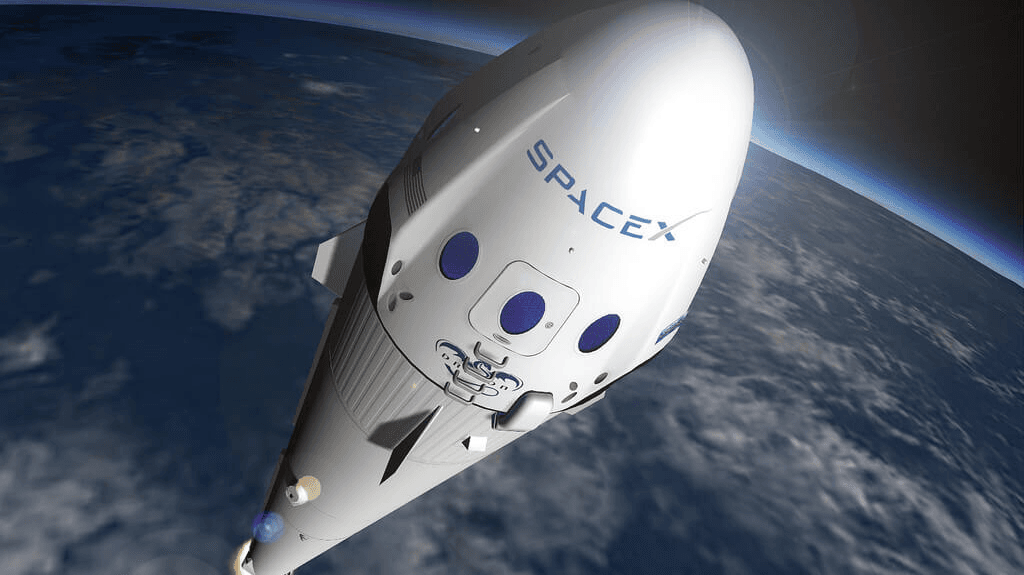
Elon Musk's SpaceX expects the loss of almost an entire batch of Starlink satellites after a solar storm hit the Earth's atmosphere.
The company launched 49 Starlink satellites using a Falcon 9 rocket on Feb. 3. The launch was successful and delivered a batch of satellites into orbit, but the next day there was a catastrophe.
The geomagnetic storm disrupted the Earth's atmosphere. Starlink's satellites were in low orbit, and the company said "up to 40 satellites" would be lost to the storm, burning up in Earth's atmosphere.
Tamita Skov, a researcher at the Aerospace Corporation, spoke about the basic principles of a geomagnetic storm: First, "the sun shoots magnets" in the form of a storm. The Earth's magnetic shield dumps the energy of a solar storm into the upper atmosphere of our planet, heats it, causing it to inflate and become denser. This increases the resistance to satellites in low Earth orbit.
SpaceX said that "the rate of increase and severity of the storm led to an increase in atmospheric drag" by 50% more than satellites typically experience in low orbit. After detecting increased atmospheric resistance, the company's task force put the satellites into emergency mode, which turns the spacecraft to the edge of orbit to reduce drag - a position the company previously called the "shark fin" orientation.
About 10 Starlink satellites are expected to survive and climb into the target orbit.
SpaceX did not say whether it was aware of the storm, which, according to the National Oceanic and Atmospheric Administration, was caused by a solar flare on Jan. 29.
NOAA ranks geomagnetic storms on an increasing severity scale from G1 to G5. The agency issued a warning about a "likely" geomagnetic storm from G1 to G2 on Feb. 2, the day before SpaceX's launch.
On average, there are 1700 such G1 storms per solar cycle, according to NOAA data cited by Eric Palmerio, a space weather researcher at Predictive Science, a company that studies the Sun for U.S. government agencies.
"It's a pretty common situation in terms of geomagnetic activity" to see a storm as strong as the one that disabled starlink satellites last week, Palmerio said.
SpaceX initially puts satellites into a lower orbit to launch more satellites at one time and to ensure that any problems identified after launch cause the faulty satellite to quickly deorbit and burn up in the atmosphere. The company touts its Starlink satellites as completely decaying upon re-entry, "which means no orbital debris and no satellite parts hitting the ground."
As a private company, SpaceX hasn't disclosed the exact cost of its Starlink satellites or Falcon 9 launches — but losing much of the mission could entail a financial shock of up to $50 million.
The company has previously reported that when SpaceX reuses its Falcon 9 rockets, the cost per launch ranges from $28 million to $30 million. And with regard to satellites, the company's management said that the estimate of the cost of one spacecraft at $ 1 million was "greatly inflated." At half that estimate — or $500,000 per satellite — losing about 40 satellites would cost about $20 million.
Notably, SpaceX previously deorbited "one or two" Starlink satellites after the mission ended, explained astrophysicist Jonathan McDowell. McDowell is an astrophysicist at the Harvard-Smithsonian Center for Astrophysics and catalogs satellite launches.
"But losing most of the party is unheard of," McDowell said. "It's a huge loss compared to anything that's happened before."
McDowell also said the loss is significant for SpaceX, as "in the context of historic satellite launches," the company "has been quite successful."
"The missile is at least very reliable ... and since mid-2020, there have been relatively few complete failures of Starlink satellites," McDowell said.
Go to all articles
Read more
11 May 2026
Ethereum Large-Holder Activity Drives Short-Term Consolidation, Instability -- Details
08 May 2026
SDA church taskforce recommends disciplinary action over investment scheme findings
06 May 2026
Coinbase Q1 Preview: Can Brian Armstrong's Crypto Giant Beat Bearish Expectations? - Coinbase Global (NAS
04 May 2026
Brazil Central Bank Bans Crypto for Cross-Border Remittances Under New eFX Rules - TokenPost
01 May 2026
10 Best Crypto Exchanges For Beginners (2026 Ranked) - Memeburn
29 April 2026
Bernstein Identifies $60,000 as Bitcoin's 'Clear Bottom' | ForkLog
27 April 2026
Bitcoin Eyes Breakout Above $80K as Institutional Inflows Fuel Momentum - Tekedia
24 April 2026
Top Coinbase marketers join OpenAI in wave of exits
22 April 2026
Breaking the RWA Value Monopoly: Zoomex Launches SpaceX Token Airdrop Carnival, Sharing a $300,000 Reward Pool
20 April 2026
US Stablecoin Framework and Korea's Digital Asset Legislation - News Directory 3
17 April 2026
Aave Price Surges 10% After Integration on Fireblocks
15 April 2026
Morning Coffee: 31-year-old trader's wife ok with seeing him 30 mins a day. Bank CEOs begin rumbling on economy
Do you need a customized plan for trading?
Effective assistance on various aspects of your trading account and other financial activities related to trading on the broker's platform.